
This Ghost Won A Guinness World Record
Yes, you read that correctly.

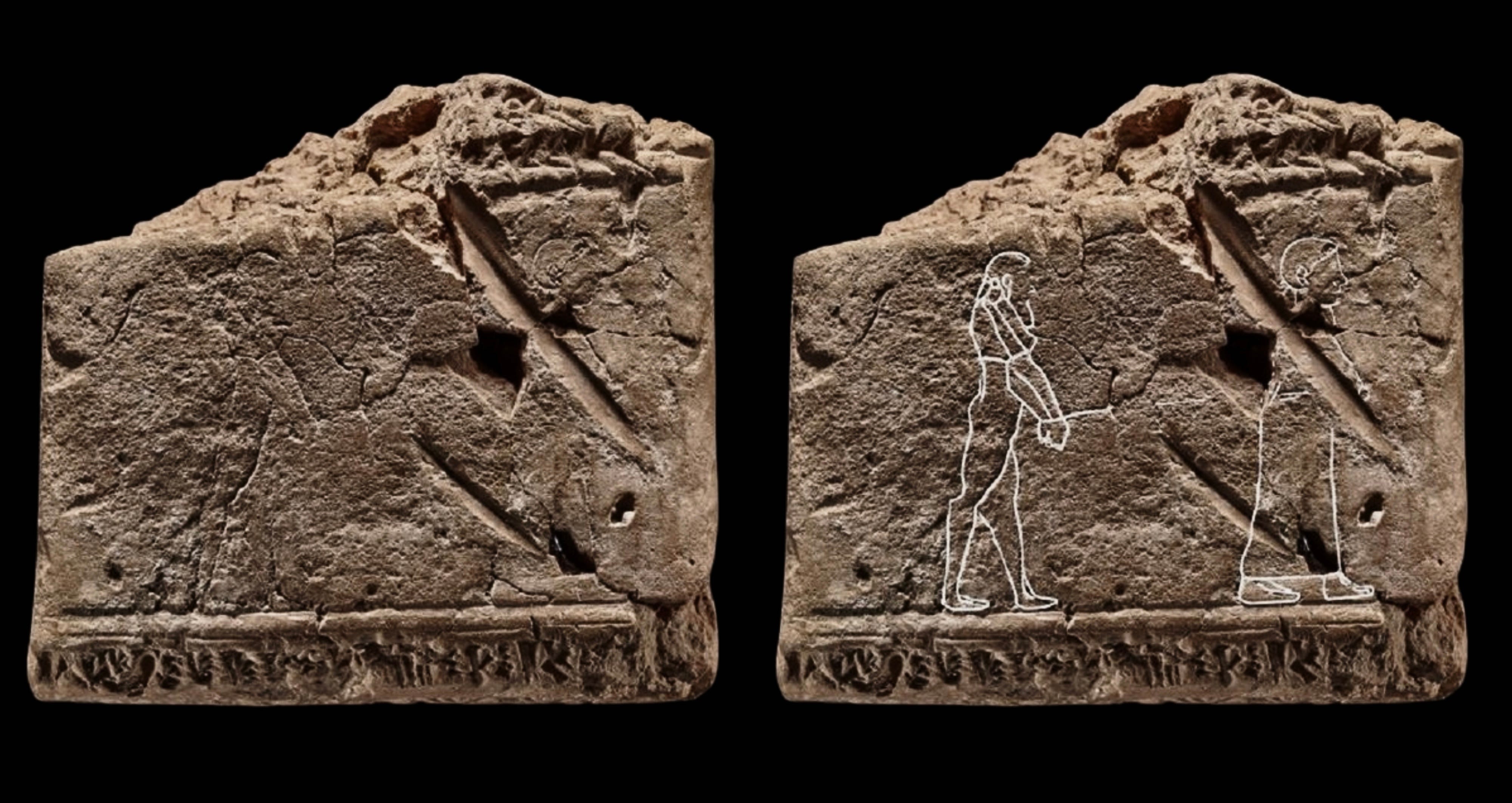
Meet the “Oldest Depiction of a Ghost”, as appropriately awarded by Guinness World Records! This Ancient Mesopotamian clay tablet (approx. 2,500 years old) functioned as part of an exorcist manual for unwanted ghosts—a very real and common problem among Ancient Mesopotamians.
The tablet features a bearded male ghost who, the tablet tells us, was lonely and neglected in the afterlife and thus haunted the living. To appease him, he was offered food, libation, and a female companion who is seen guiding him on a lead back to the Netherworld.
This occurred because the ghost maintained certain needs required of their once living form, including feelings of “hunger, thirst, and the need for attention.” (Heinrich, 2024)
After someone passed away, it was believed that a proper burial would help to ensure that their ghost moved on peacefully to the Netherworld and stayed there... that is, so long as the living (ideally family) continued to acknowledge, honor, and care for them.
It is when this supply of sustenance stops that one might create an angry and restless ghost who could inflict headaches, disease… pretty much every illness under the sun unto the living.
As we can infer, before acquiring our current knowledge on germs and the human body, ghosts helped to explain such unfortunate facets of life.
To help avoid a haunting, intramural funerary chambers, such as family chambers constructed underneath one’s home, were implemented for ease of leaving offerings to avoid neglecting an ancestor spirit.
If the family left and were unable to take their dead with them, the next family to move in would likely care for them to also avoid a haunting.
This was important considering that, over time, such malevolent ghosts could eventually “become more or less demonic—the utukku demons.” (Scurlock, 2016) Similarly, communal cemeteries for the dead who had no one were placed on the outskirts and avoided like the plague for the neglected ghosts they housed.
But should one find themselves to be inflicted by a ghost, exorcists (like the one who sported this award-winning manual) and protective amulets were aplenty until they identified and appeased the spectral culprit!
Of course, none of this information is perfect—understanding such ancient textual evidence requires lengthy research, translation after translation, and educated guess work to fill in the blanks. Regardless, the information we have learned and surmised from such Ancient Mesopotamian artifacts is invaluable in helping us to better understand the ghost!
Sources:
Adrian Cornelius Heinrich, “Ghosts, Mesopotamia” Oxford Classical Dictionary, 2024
Dr. Irving Finkel, “The First Ghosts”, Hodder, 2021
JoAnn Scurlock, “Mortal and Immortal Souls, Ghosts and the (Restless) Dead in Ancient Mesopotamia” Religion Compass, 2016
This is super fascinating, I love it!